Gear Motor Guides
DC Gear Motor Supplier: What to Check Before You Order
How to tell a real DC gear motor supplier from a trading company: six checks — real photos, real datasheets, named models, process, sampling and reply speed.
A real supplier shows you the factory, the datasheet and a named model — and answers your drawing with a feasibility reply, not a price list. Check six things before you order: real photos, real spec sheets, named models, a clear process, sampling, and reply speed.
This guide is for buyers comparing DC gear motor suppliers before a first order. It is not a ranking — we do not name or rate other suppliers. Every check here is one you can run on us, using the evidence on this site.
Can I see the factory?
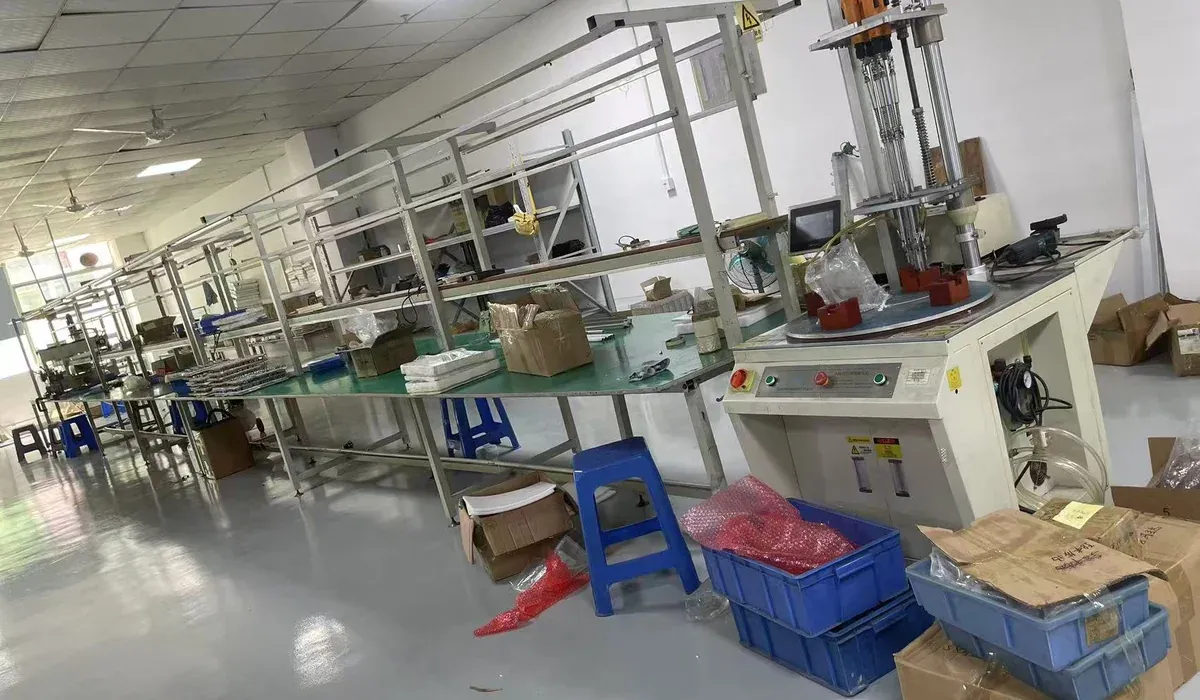
A supplier that makes motors can show you where they are made. Look for photos of the actual work: workbenches, assembly, winding, testing. The photos should be specific — the same workshop from more than one angle, the same product line in more than one shot — and consistent across the site. A single polished photo on the homepage and nothing else is not evidence.
What to be careful about: stock photos and renders on their own. A render alone, with no datasheet behind it, proves nothing — it shows the supplier can hire a designer, not that the motor exists. A stock photo of a factory that could belong to anyone proves nothing either. Ask for a photo of the workshop where your motor would be built, and a photo of a finished unit of the type you are ordering.
Our evidence is on the Factory page: the gearbox assembly area at our partner factory in Guangming, Shenzhen — workbenches and assembly equipment, photographed in the workshop, not staged. The factory was founded in 2012 and has made gear motors and planetary motors since then, and gearbox assembly is done in-house. We are the export arm of that factory: the factory makes the motors, and we handle the inquiries, drawings, sampling and orders from overseas customers. We do not claim to own the factory, and we do not show you someone else's.
Can I see the real datasheet?
A real datasheet has numbers you can check: voltage, reduction ratios, torque at maximum efficiency and at stall, dimensions, shaft size and mounting. A marketing page has adjectives. Before you design around a motor, ask for the datasheet — and read it.
Check three things on the sheet. First, that the torque figures distinguish normal running from stall: a motor's stall torque is always much higher than the torque it delivers in normal running, and a sheet that only prints the bigger number is hiding the useful one. Second, that the dimensions and mounting are drawn, not just described — a drawing with the shaft diameter and the fixing holes is worth more than a paragraph. Third, that the numbers agree with each other: even factory datasheets have typos, and a sheet whose curve title disagrees with its own parameter table is a sheet nobody checked.
We check every sheet before we quote. On our own FY-16GA050 sheet, for example, one curve title disagrees with its own parameter table on the test voltage — we flag it and use the parameter table, and we ask the factory to confirm it. If a number on a datasheet looks wrong, ask the supplier to confirm it before you design around it. A supplier who cannot explain their own datasheet cannot build to your drawing.
Does the supplier name real models?
A supplier with real products names them. A model name with a parameter table gives you something to check a quote against: the voltage, the ratio, the torque, the size. A supplier who says "we can make anything" and shows no model at all gives you nothing to verify — no way to tell whether the quote is for a motor that exists or a motor that will be improvised after you pay.
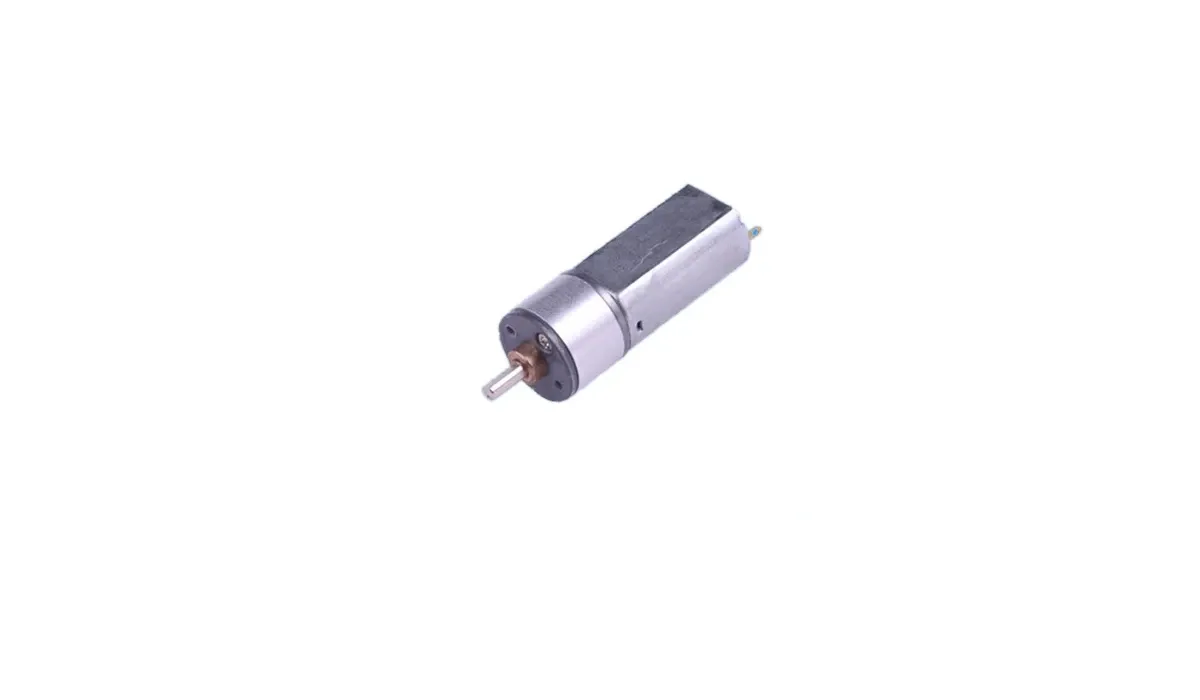
Look for named reference models with complete parameters, and check that the parameters are consistent across the model: the same model should not change its voltage or its torque from one page to the next. Our reference models are on the DC Gear Motors page — for example the FY-16GA050, a 16 mm cylindrical gear motor for 6/12/24 V, with its full parameter table, and the FY-119FA40ZY, a 119 mm worm gear motor for high-torque equipment. Every parameter on those pages can be adjusted to your drawing — but the starting point is a real model with real numbers, not a blank promise.
Is there a clear custom process?
Custom work needs a process you can follow. Before you order, the supplier should be able to tell you, in order: what to send, who evaluates the drawing, when you hear back, what sampling covers, and what the minimum order and lead time are. If the process is vague — "send your inquiry and we will handle it" — the accountability is vague too.
Our process is on the Custom Process page, in four steps: send your inquiry with the drawing and requirements; the factory evaluates the parameters and feasibility and replies within 1 working day; selected models are sampled free of charge, with samples ready in as fast as 1 day depending on complexity; production ships in as fast as 7 days after order confirmation, with orders from 50 pcs when materials are in stock. Each step names who does what and when. If a supplier cannot describe their process that plainly, ask why.
Can I test a sample before I commit?
A sample is how you check fit and function on your own machine before ordering in bulk. Before you order, ask three questions of any supplier: which models can be sampled free of charge, how fast the sample arrives, and what happens if the sample does not fit.
Our answers: selected models can be sampled free of charge, and samples can be ready in as fast as 1 day, depending on complexity. If the sample does not fit — the size, the speed, the torque — tell us what is wrong and we propose another configuration. The sample is part of the ordering process, not a separate purchase: it exists to prove the configuration on your machine, and a supplier with a real evaluation step will treat it that way.
Be careful with "free sample" claims that have no detail behind them. Free for which models, how fast, and what the sample actually is — a unit built to your drawing, or a standard unit from stock? The answers matter more than the word "free".
How fast — and how specifically — do they reply?
Speed matters, but specificity matters more. A reply within 1 working day that deals with your drawing — the load, the voltage, the space — is an answer. A reply within an hour that only asks for your quantity and target price is not: it tells you the supplier has not read the drawing.
Test this before you order. Send a drawing, or the five numbers — application, voltage, torque and speed, size and mounting, quantity — and judge the reply: does it confirm the parameters and the feasibility, propose a configuration, and give you the sampling and production terms? Or does it ask you to decide first and explain later? Our reply comes within 1 working day, and it contains the feasibility answer, the proposed configuration, and the terms for your order. That is the test we invite you to run on us.
The six checks, in one list
Run these six checks on any DC gear motor supplier — including us — before your first order:
- Real factory photos. Workbenches, assembly, testing — specific and consistent across the site. Ours: the Factory page.
- Real datasheets. Numbers you can check: voltage, ratios, torque at maximum efficiency and at stall, dimensions, mounting. Ours: every reference model carries its parameter table.
- Named models. A model name with parameters, not "we can make anything" with nothing to verify. Ours: DC Gear Motors.
- A clear custom process. What to send, who evaluates, when you hear back, what sampling covers, MOQ and lead time. Ours: Custom Process.
- Sampling. Which models are free to sample, how fast, and what happens if the sample does not fit. Ours: selected models free, as fast as 1 day.
- Reply speed and specificity. A feasibility answer within 1 working day — not just a fast acknowledgement. Ours: reply within 1 working day with the proposed configuration.
A supplier who passes all six is not necessarily the cheapest. They are the one you can check — and a supplier you can check is a supplier you can hold to the drawing.
Three mistakes buyers make when choosing a supplier
- Judging by the website alone. A nice website is not a factory. A supplier with a polished homepage and no factory photos, no datasheet and no named model is asking you to trust the design, not the product. Ask for the photos and the sheet before you ask for the price.
- Taking a price before the drawing is evaluated. A price quoted without the drawing is a guess — the configuration follows the evaluation, and the price follows the configuration. Any supplier who prices first and reads the drawing later is pricing a different motor.
- Ordering in bulk without a sample. A sample is cheap insurance against a wrong configuration: it checks the fit, the speed and the torque on your machine. Skipping it to save a day can cost a production run. Selected models sample free, and samples can be ready in as fast as 1 day — there is little reason to skip the test.
Frequently asked questions
What proof should I ask for instead of a certificate? Ask for the things a certificate cannot fake: a photo of the workshop, the datasheet with checkable numbers, a named model with a parameter table, and a sample built to your drawing. A certificate says a system was audited; the photo, the sheet and the sample say this motor exists and fits your machine.
Can I get a sample before ordering in bulk? Yes. Selected models can be sampled free of charge, and samples can be ready in as fast as 1 day, depending on complexity. The sample is built to your drawing parameters so you can check fit and function on your own machine before committing to production.
What should I send a supplier to get a real quote? Your drawing (PDF, DWG or STEP) plus the five numbers: application, voltage, torque and speed, size and mounting, quantity. Without the drawing, the application and target torque and speed are enough for a proposed configuration — but a price quoted before the drawing is evaluated is a guess, not a quote.
How long does it take to get a reply? We reply within 1 working day, with a feasibility answer and a proposed configuration — not just an acknowledgement. Send the drawing and the five numbers and judge the reply by whether it deals with your load, your voltage and your space.
Test us
The six checks above are not a theory — they are a test, and you can run it on us right now.
Send your drawing and the five numbers — application, voltage, torque and speed, size and mounting, quantity — to info@fonyongroup.com. What you send: the drawing and five numbers. What you get: a feasibility answer and a proposed configuration, with the sampling and production terms for your order. Who replies and when: our factory evaluation, within 1 working day. Or read how custom ordering works first, or browse the DC gear motor reference models.